TABLE OF CONTENTS

Teams evaluating Sana Learn are usually dealing with a familiar tension. Training content takes time to produce, knowledge is spread across systems, and even when learning is delivered, it does not always translate into consistent performance.
At that point, the question shifts. It is no longer simply about choosing a platform. It becomes a decision about how learning should be created, managed, and used in practice.
Some organisations prioritise control and structure. Others focus on speed and accessibility. In frontline environments, the challenge is often whether training can be applied at the moment it is needed.
Looking at Sana Learn alongside a small number of well-defined alternatives helps clarify those trade-offs.
At a glance: Sana Learn vs. Articulate 360 vs. Cornerstone vs. eduMe
| Platform | What it is best for | Key strengths | Considerations |
|---|---|---|---|
| Sana Learn | AI-powered learning from internal knowledge | Fast course creation, knowledge search, AI-assisted learning paths | Best suited to knowledge-heavy teams with time and access to engage |
| Articulate 360 | Creating polished eLearning courses | Strong authoring tools, interactive course design, SCORM-ready output | Requires manual course creation and ongoing maintenance |
| Cornerstone | Enterprise learning governance | Compliance, certifications, audit trails, structured learning programs | Heavier administration and longer implementation cycles |
| eduMe | Frontline enablement and execution | Workflow-embedded training, process-specific guidance, mobile-first delivery | Best suited to frontline and deskless teams rather than generic course libraries |
Why teams evaluate Sana Learn in the first place
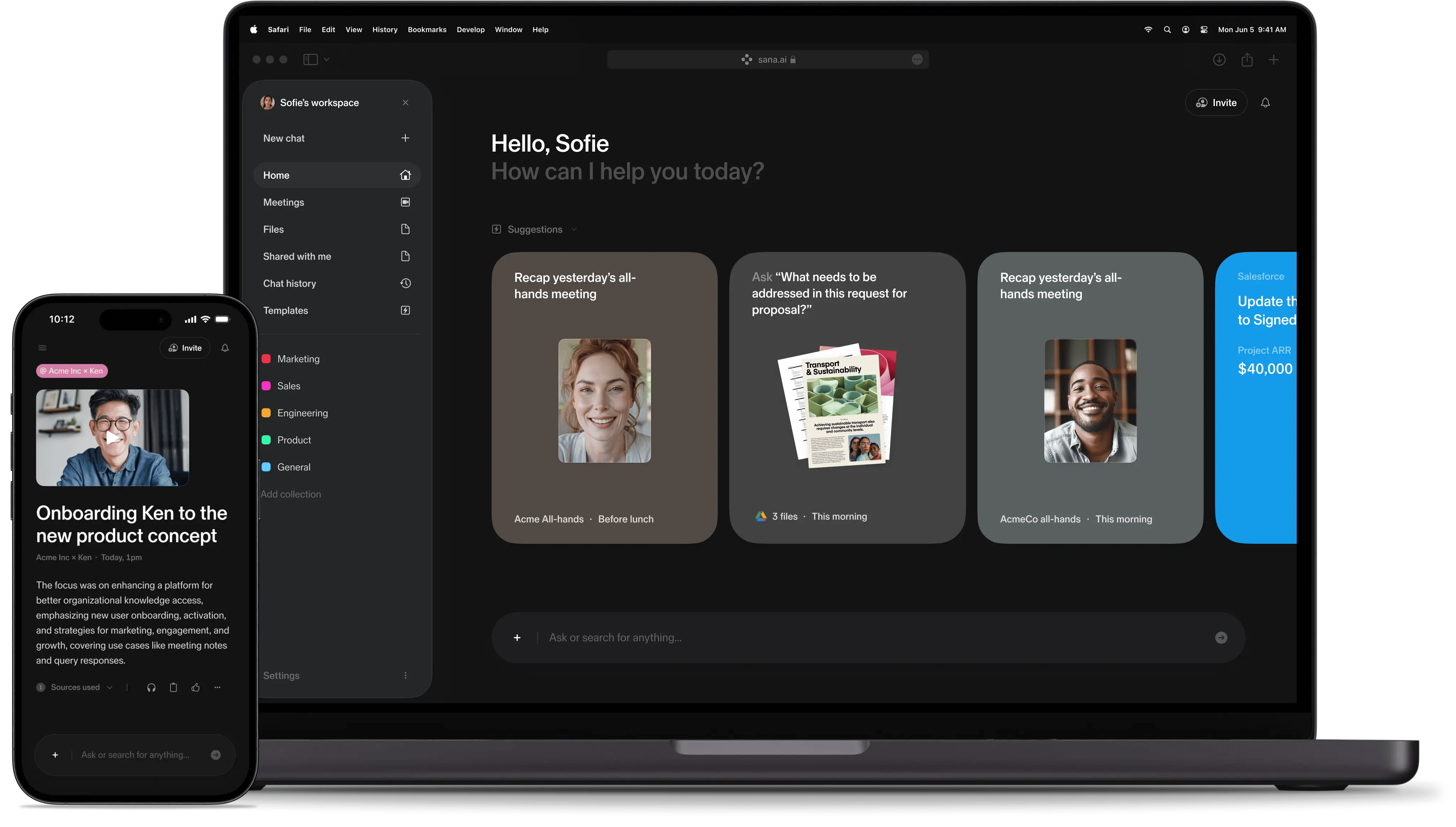
Sana Labs is typically introduced when training production starts to lag behind the business. Teams are creating documentation constantly, but turning that knowledge into structured learning takes time, coordination, and specialist input.
Sana addresses that gap directly. Instead of building courses from scratch, it allows teams to generate learning from existing materials. Documents, recordings, and internal resources become the starting point, rather than the end product.
This shifts the role of L&D. Instead of focusing on course production, teams spend more time shaping, validating, and distributing knowledge that already exists.
In practice, Sana is most often evaluated in organizations where:
- knowledge changes frequently
- content creation is a bottleneck
- employees rely on access to information to do their jobs
This makes it particularly relevant in technology, professional services, and product-led environments where speed matters more than formal structure.
Who Sana Learn is designed for
Sana Learn fits best in organizations with a predominantly desk-based workforce that interacts with knowledge systems throughout the day.
These teams tend to:
- work from personal devices rather than shared ones
- have time to search, read, and engage with content
- operate in environments where documentation is already central to how work gets done
Typical use cases include onboarding knowledge workers, sales enablement, internal knowledge sharing, and continuous skills development.
The platform is less aligned with environments where training needs to be delivered quickly, in short bursts, or in the middle of operational workflows. In those contexts, the assumption that users will log in, search, and consume content becomes harder to rely on.
Sana Learn core strengths and key features
Sana Learn is most often chosen for its ability to reduce the time between knowledge creation and learning delivery.
Rather than building courses manually, teams can generate structured learning from existing materials and make that content accessible across the organization.
This shows up most clearly in content generation and knowledge access.
Sana Learn AI content creation
Sana allows teams to generate learning content from documents, recordings, and internal knowledge sources. Lessons, quizzes, and structured pathways can be created without relying on traditional authoring workflows.
This reduces production time and makes it easier to keep training aligned with current information.
Sana Learn knowledge search and accessibility
Sana also supports a search-driven experience. Employees can query internal knowledge and retrieve structured answers, rather than navigating through full courses.
This changes how learning is consumed. Instead of progressing through predefined programs, users can:
- search for specific answers
- access content in shorter interactions
- return to learning as needed
For knowledge workers, this often aligns more closely with how work is already done. The platform becomes part of the broader knowledge ecosystem rather than a standalone training destination.
Reporting and visibility
Sana provides visibility into how content is used across the organization. This includes engagement metrics, learning activity, and usage patterns.
The emphasis is on understanding:
- which content is accessed most frequently
- how learners interact with materials
- where gaps in knowledge may exist
Compared to traditional LMS platforms, reporting is less focused on compliance and certification tracking, and more on content effectiveness and accessibility.
Practical constraints to be aware of
Sana Learn assumes a level of time, access, and digital fluency that may not exist across all workforces.
Employees are expected to:
- log into the platform
- search for or engage with content
- spend time consuming information
This works well for desk-based teams. It can introduce friction in environments where time is limited or work is highly operational or task-driven.
Organizations that require strict compliance tracking or heavily structured programs may also need additional systems alongside Sana to meet those requirements.
Sana Learn pricing
Sana Learn uses a sales-led pricing model. Costs are determined based on user volume and territory.
Pricing is not publicly listed, so buyers should expect to request a quote directly from Sana.
Sana Learn demo
Sana does not offer a self-serve demo environment. Teams typically need to speak with their team to see the product in action, either through a guided walkthrough or tailored demo based on their use case.
While Sana publishes product videos and high-level overviews, hands-on evaluation generally happens through a sales-led process rather than direct product access..
Top Sana Learning Competitors
With so many tools in the market, it's important to understand key nuances between them before embarking on deeper evaluations, whether that be sales-led conversations or RFPs.
The following platforms might appear in evaluations alongside Sana Learn :
- eduMe focuses on frontline training and execution within workflows
- Articulate 360 focuses on structured course creation and instructional design
- Cornerstone focuses on governance, compliance, and enterprise-scale learning management
In reality, each reflects a different approach to learning.
So if Sana sits within a knowledge-driven learning model, where speed and accessibility are prioritized over formal structure - what about the others?
eduMe as a Sana Learn alternative

Product overview
eduMe focuses on training and enablement for frontline and deskless workers, particularly in environments where performance needs to be consistent, measurable, and tied to real-world tasks.
Rather than acting as a central destination for learning, eduMe connects training directly to operational workflows. It is used in industries such as retail, hospitality, logistics, and manufacturing, where training is not just about knowledge transfer, but about ensuring that work is carried out correctly, safely, and to standard.
In practice, this means eduMe sits closer to execution than traditional learning platforms. It supports not just what employees know, but what they actually do on the job.
eduMe mobile-first microlearning
eduMe delivers training in short, focused formats designed to be completed during work. Content is optimized for phones and shared devices, with minimal navigation required.
This supports environments where employees do not have time to engage with longer courses.
eduMe embedded delivery in daily workflows
A defining characteristic of eduMe is how training is delivered. Instead of requiring users to access a platform, content is surfaced within existing workflows.
This can include:
- direct links from workforce systems
- QR codes in physical environments
- SMS or messaging-based access
Training and guidance are available at the point of need - employees do not need to step away from their role or navigate a learning environment to find what they need.
The result is that training becomes part of the task, rather than something that happens separately.
eduMe operational training and compliance execution
eduMe is often used in environments where training is tied to regulatory standards, internal processes, or operational consistency. A key difference is how eduMe handles verification.
Teams can:
- assign mandatory training tied to roles, locations, or job functions
- ensure completion with clear visibility into who has and has not completed required training
- align content to internal standards such as SOPs, safety procedures, or compliance frameworks
This is particularly relevant in industries where failure to follow process has direct consequences, whether that is safety risk, quality issues, or regulatory exposure.
Beyond quizzes or course completion, teams can assess performance directly in the field via on-the-job validation. Managers or supervisors can:
- complete structured checklists during shifts
- rate performance against defined criteria
- capture observations in real time
This allows organizations to validate that employees can perform tasks to the required standard, not just recall information.
For operational roles, this closes the gap between training and execution. It also provides a clearer picture of readiness, particularly for onboarding or role progression.
eduMe AI: content creation, knowledge access, and frontline execution
eduMe’s AI sits across the full lifecycle of training, from how content is created to how it is applied on the job.
On the creation side, teams can upload existing materials such as SOPs, process documents, or internal guides and convert them into structured, frontline-ready lessons in minutes.
The platform generates bite-sized training, knowledge checks, and supporting assets automatically, allowing organizations to keep content aligned with real-world operations without long production cycles. Training can also be refined conversationally, with creators iterating on tone, clarity, and structure or generating additional elements such as imagery and quizzes as needed.
For learners, AI acts as an on-demand knowledge layer embedded directly into the experience. Employees can ask questions in their own words and receive immediate, context-specific answers drawn from company content, without needing to search through documents or navigate course libraries. This is particularly relevant in frontline environments where time is limited and decisions need to be made quickly, often without access to a manager.
Crucially, this model is designed for the realities of operational work.
Content is delivered in short, visual formats that do not rely on audio, making it usable in noisy environments such as shop floors, warehouses, or kitchens. Combined with instant AI-powered answers, this allows training to move beyond scheduled learning and function as real-time guidance, supporting both knowledge retention and correct execution in the moment.
eduMe limitations and trade-offs
eduMe is not designed to replace an enterprise LMS tools - like Docebo for example - as it does not support complex performance frameworks, does not come with extensive, pre-packaged course libraries and does prioritize course completion as a metric of success.
For this reason, organizations focused on structured development programs may be better off looking for an enterprise-grade Learning Management System.
Best fit use cases for eduMe
eduMe fits organizations with:
- large frontline populations
- high turnover environments
- training tied closely to daily operations
It is less suited as a standalone platform for corporate development programs.
eduMe pricing
eduMe uses annual, user-based pricing structured around defined workforce coverage. A core package is available, with additional modules depending on requirements.
Pricing is provided on request.
eduMe demo
eduMe offers a free, guided trial that allows teams to test how training and guidance are delivered in real workflows. Try it here.
Articulate 360 as a Sana Learn alternative
Product overview
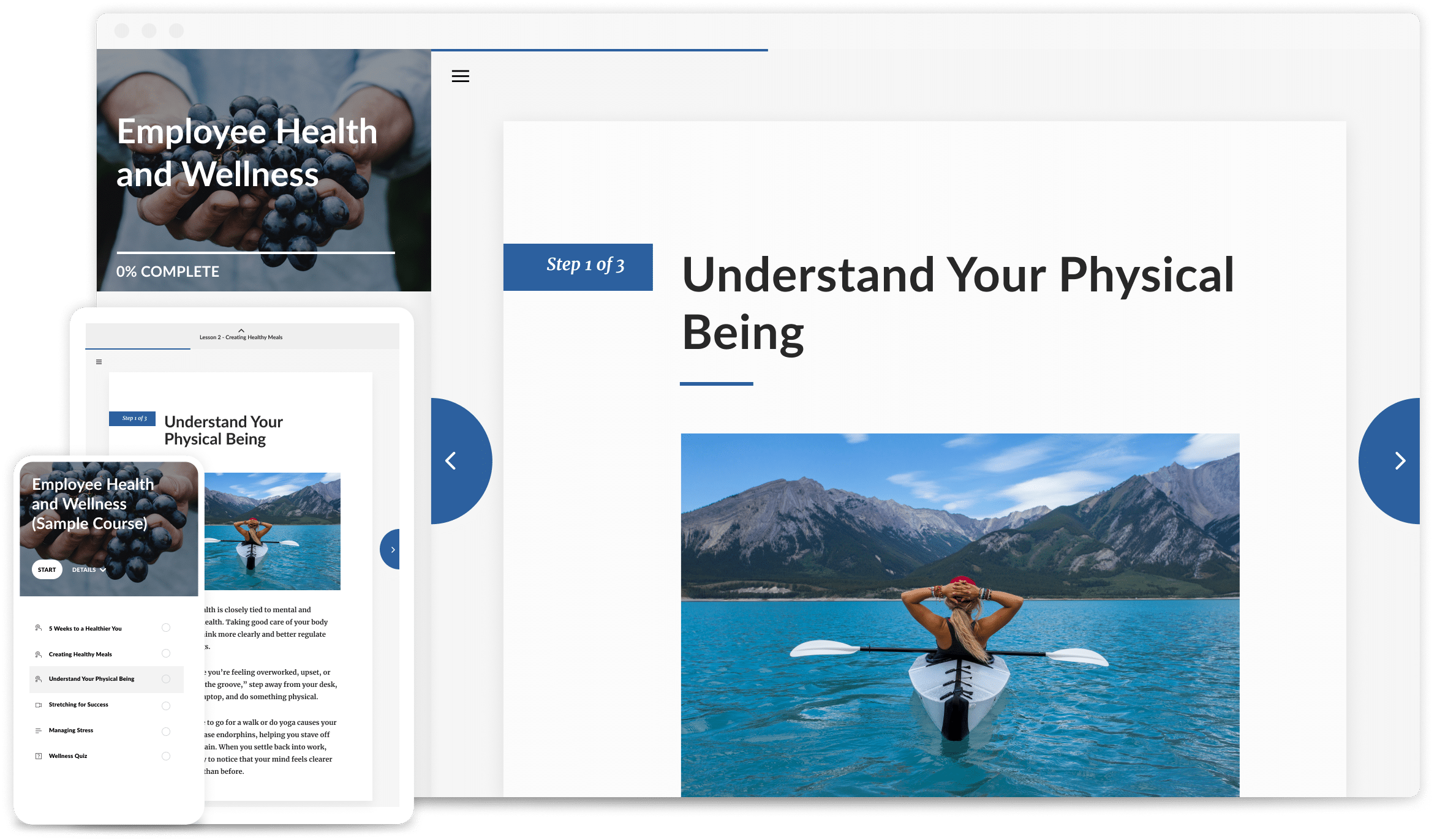
Articulate 360 is widely used by L&D teams that need to produce structured, high-quality training content. Unlike Sana Learn, which focuses on turning existing knowledge into learning quickly, Articulate is built around designing courses from the ground up.
In practice, this means instructional designers are responsible for shaping the learning experience. Content is planned, structured, reviewed, and refined before it is delivered. The output is typically a SCORM or xAPI package that is then uploaded into an LMS for distribution and tracking.
This model is deliberate and controlled. It works best in environments where training needs to be standardized, auditable, and consistent across large groups of learners.
Articulate 360 course authoring
Articulate’s core strength is in how much control it gives teams over course design. Using tools like Storyline and Rise, teams can build detailed learning experiences that go well beyond static content.
Courses can include:
- branching scenarios that simulate real decision-making
- step-by-step process walkthroughs
- embedded assessments and knowledge checks
- video, audio, and interactive elements layered into lessons
This level of control matters in situations where training is not just about transferring information, but about ensuring understanding and retention.
For example, compliance programs, safety training, or certification pathways often rely on structured progression and assessment logic that tools like Articulate handle well.
The trade-off is that this level of detail takes time. Even relatively simple courses require planning, design, and iteration before they are ready to deploy.
Articulate 360 structured course output
Once courses are built, they are exported and delivered through a learning platform. This creates a clear separation between content creation and content delivery.
For organizations with an existing LMS, this is often an advantage. Articulate becomes the content engine, while the LMS handles enrollment, tracking, and reporting.
It also means content can be tightly controlled. Updates are versioned, reviewed, and re-published, which supports consistency across large or regulated organizations.
However, this workflow introduces latency. When underlying knowledge changes, courses need to be updated manually, re-exported, and re-uploaded. In fast-moving environments, this can create a gap between what is documented and what is actually happening on the ground.
Articulate 360 limitations and trade-offs
The main constraint with Articulate is not capability, but speed and scalability.
Because content is built manually:
- production depends on instructional design capacity
- updates require revisiting and editing existing courses
- rapid iteration is difficult when information changes frequently
This becomes more noticeable in organizations where training needs to keep pace with product updates, operational changes, or shifting internal processes.
There is also a structural assumption behind the model. Learners are expected to:
- access a platform
- complete courses in defined sessions
- progress through content in a structured way
That works well in planned learning environments. It is less aligned with workflows where learning needs to happen in short, unpredictable moments.
Best fit use cases
Articulate 360 is therefore best studied to:
- formal, structured training programs
- organizations with dedicated L&D or instructional design resource
- compliance and certification training
It is less suited to environments where:
- content changes frequently
- training needs to be created quickly
- learning is tightly embedded in day-to-day work
Articulate 360 pricing
Articulate 360 is sold as an annual subscription. Pricing varies depending on the number of creator licenses required, since only content authors need full access to the platform.
At the time of writing:
- The Teams plan is priced at $1,749 per user per year and is designed for organizations building and managing training collaboratively
- The Personal plan is priced at $1,449 per user per year and is aimed at individual creators or contractors
For the most accurate and up-to-date pricing, teams should refer to Articulate’s pricing page or speak directly with their sales team.
Articulate 360 demo
Articulate provides direct access to a free trial environment, which is often the most effective way to evaluate the product. Teams can build sample courses, test workflows, and understand the level of effort involved in producing content.
For buyers comparing Sana Learn alternatives, this hands-on experience makes the difference in approach to production and inputs required immediately clear.
Cornerstone as a Sana Learn alternative
Product overview
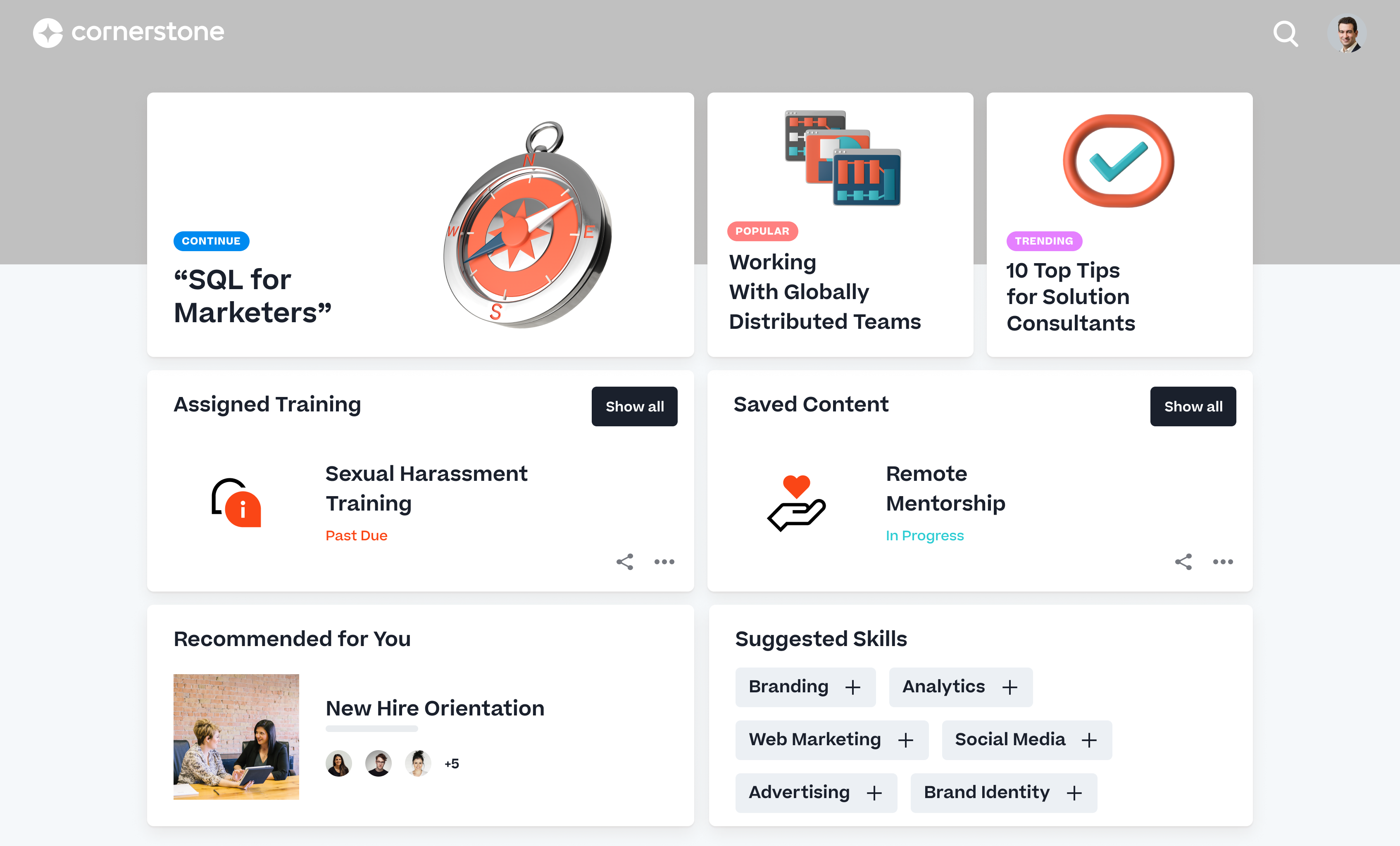
Cornerstone Learn sits within the broader Cornerstone platform, a large enterprise talent ecosystem that spans learning, content, performance, mobility, recruiting, succession, skills intelligence, and workforce planning.
For this comparison, the relevant product is Cornerstone Learn: the learning suite used to manage formal training, compliance, onboarding, enablement, development, and customer education. It is most often evaluated by organizations that need to govern learning across large, complex workforces, rather than simply create training faster.
Compared to Sana Learn, Cornerstone represents a very different buying motion. Sana is typically considered when teams want faster content creation, AI-powered knowledge access, and a more fluid learning experience.
Cornerstone is considered when learning needs to sit inside a broader enterprise talent architecture, with formal controls, reporting, and links to other HR and workforce processes.
Cornerstone Learn compliance and certification management
Cornerstone Learn’s strongest use case remains structured, compliance-led learning.
Organizations can:
- assign training based on role, region, or regulatory requirement
- track completions and expirations centrally
- manage certification and recertification cycles
- generate audit-ready reports
This is particularly relevant in industries such as healthcare, financial services, and aviation, where training is not optional and must be documented precisely.
In these environments, the value of Cornerstone is not just delivering training, but proving that it has been completed correctly.
Cornerstone Learn as part of a broader talent suite
Cornerstone is also different from Sana because learning is only one part of the wider platform.
Organizations can connect learning to adjacent areas such as performance, succession, skills, mobility, recruiting, and workforce intelligence. This makes Cornerstone attractive to enterprises that want learning to support broader talent initiatives, rather than operate as a separate content or knowledge layer.
That breadth is part of Cornerstone’s appeal, but also part of the trade-off.
Buyers are not usually adopting a lightweight learning tool. They are entering a larger ecosystem, where value increases as more modules are connected, but implementation and administration also become more involved.
Cornerstone Learn structured program management
Cornerstone is designed around formal learning programs rather than ad hoc knowledge access.
Training is assigned through predefined pathways, completed over scheduled timeframes, and tracked against organizational requirements. Administrators control enrollment, sequencing, completion criteria, reporting, and access.
Compared to Sana, where users can search and interact with knowledge more freely, Cornerstone gives organizations tighter control over how learning is consumed. The experience is more directed and more governed than speed-focused.
Cornerstone Learn limitations and trade-offs
Cornerstone’s scale and breadth come with practical constraints.
Implementation usually requires more planning and configuration than lighter learning platforms. Administrative overhead is higher, and changes to learning structures or workflows may take longer to roll out. The learner experience can also feel more formal, because users are generally expected to access the platform, complete assigned training, and progress through structured programs over time.
For teams evaluating Sana Learn alternatives, Cornerstone is the heavyweight option.
It is a better fit when governance, auditability, and enterprise talent alignment matter most. It is less suited to teams looking primarily for fast content generation, informal knowledge access, or short, workflow-embedded training.
Cornerstone Learn pricing
Cornerstone pricing is not publicly listed and is provided through a sales-led process. Prospective buyers are required to submit their details before receiving pricing information.
Pricing will depend on the products selected, organization size, implementation requirements, and whether Cornerstone Learn is being purchased alone or as part of a wider Cornerstone suite.
Cornerstone Learn demo
Cornerstone offers both a gated quick demo for Cornerstone Learn and a 'product tour' (which requires business email and other mandatory fields to access) that showcases the product UI and key features.
Choosing between Sana Learn and its alternatives
The right choice depends on how learning is expected to function inside your organization.
Sana Learn works best in knowledge-rich environments where content needs to be created quickly and accessed on demand. It suits desk-based teams that rely on documentation, internal expertise, and AI-assisted knowledge discovery.
Articulate 360 is a better fit when the priority is designing polished, structured learning experiences. It is typically used by teams investing in high-quality course production rather than rapid, continuous knowledge sharing.
Cornerstone serves organizations where governance, compliance, and consistency outweigh speed. It is most relevant in large enterprises that need centralized control over training and clear auditability across regions and roles.
eduMe is designed for operational environments where learning needs to happen during work, not around it. It focuses on delivering training in the flow of tasks, reinforcing correct behavior, and supporting execution in real time.
Final verdict
For teams evaluating Sana Learn alternatives, the decision ultimately comes down to workforce context and how learning is applied day to day.
Sana is a strong option for desk-based organizations where knowledge is the primary asset and speed of access matters. Its strengths are most visible when employees have time, context, and tools to engage with learning in a more flexible, self-directed way.
When learning needs to reach frontline teams, support compliance in real-world environments, or drive consistent execution on the job, a platform like eduMe addresses challenges that knowledge-centric systems are not designed to solve.
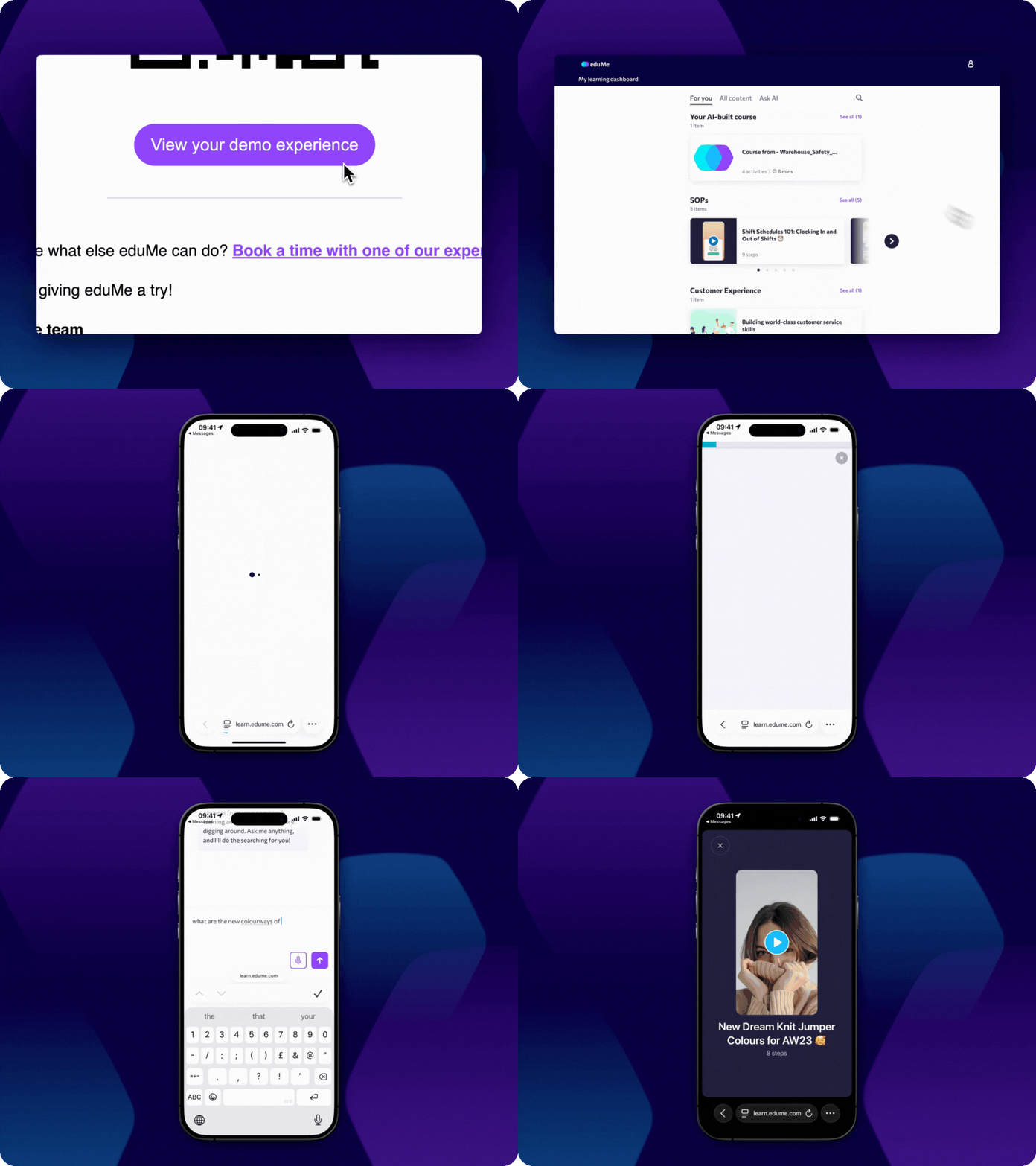
If eduMe is relevant to your use case, you can explore a guided product preview below to see how training, knowledge, and AI-powered support are delivered directly within day-to-day workflows.
Experience eduMe in <60 seconds
No credit card required. No software to install. Just a hands-on preview of how frontline teams learn with eduMe.
Join 10,000+ frontline leaders
Subscribe to ‘Training the Frontline’ and get weekly insights sent straight to your inbox.