AI Prompt Workbook for Learning & Development: Design Better Training with AI
Discover the best AI prompts for instructional design. This free workbook helps L&D leaders create better training using AI with prompt templates, exercises, and real examples.
What is the value of using AI prompts for L&D?
Using AI in learning and development is quickly becoming a core capability for teams responsible for designing and delivering training. Whether building courses from scratch or refining existing materials, AI prompts allow instructional designers, training providers, and corporate trainers to produce higher-quality content in less time.
AI prompts for instructional design can be used to:
-
Create structured training content aligned to learning objectives
-
Adapt content for different audiences, roles, or experirence levels
-
Generate scenarios, assessments, and reinforcement activities
-
Evaluate and improve clarity, relevance, and effectiveness
This makes them particularly valuable for professionals creating training at scale, including those responsible for workplace training, onboarding, and ongoing capability development.
For course creators and L&D teams working within an LMS, AI prompts can support everything from early-stage design through to delivery. This includes AI prompts for creating courses in your LMS, AI prompts that create ready to publish courses, and best AI prompts for course creators looking to improve both speed and quality.
More broadly, AI prompts for workplace training enable teams to move beyond static content creation and toward a more structured, repeatable approach to designing learning experiences.
What types of AI prompts support instructional design?
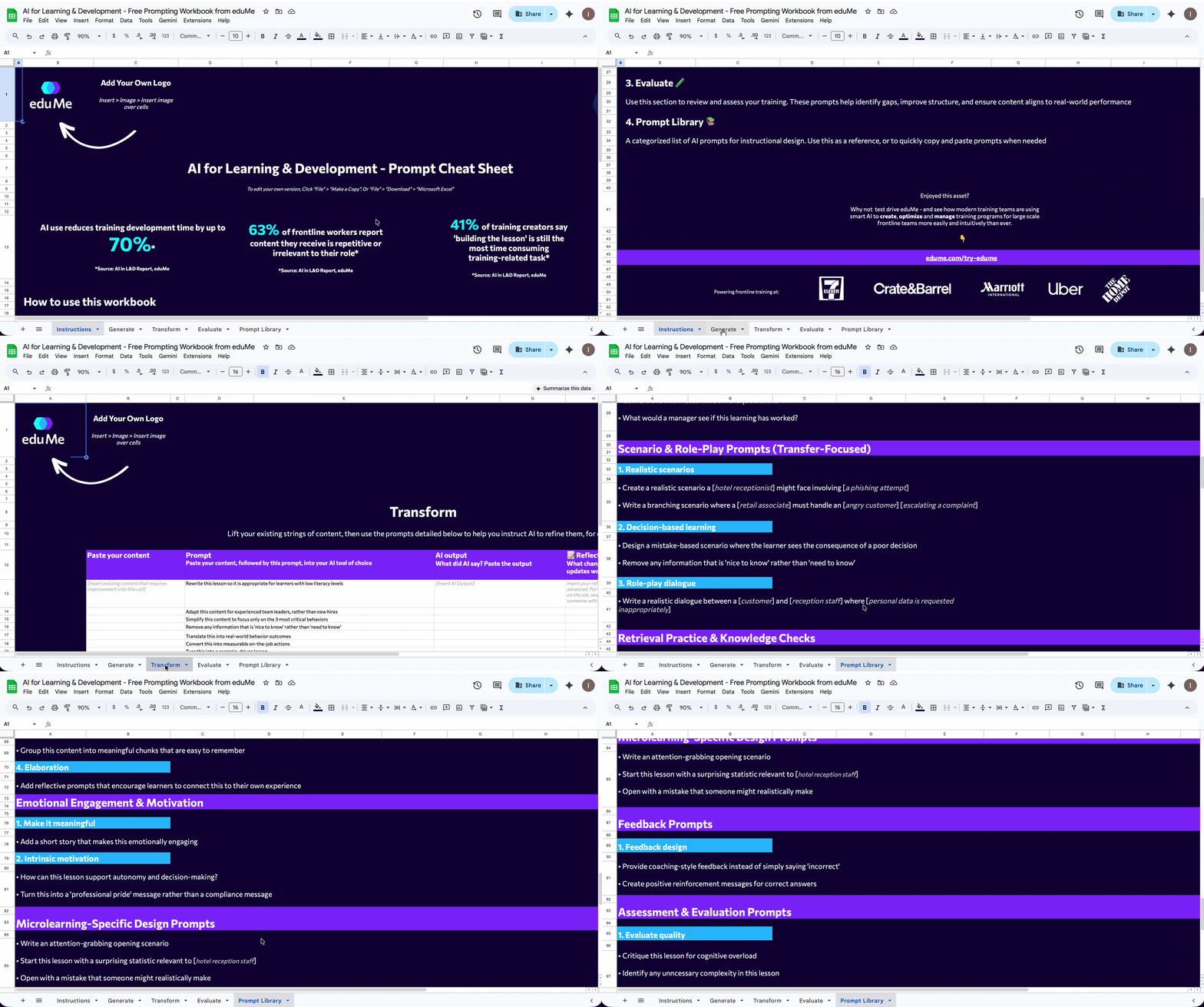
AI prompts that support instructional design typically fall into three categories.
-
Generate prompts are used to create new content, such as lessons, scenarios, or knowledge checks. These are particularly useful when starting from a blank page or building new training programs.
-
Transform prompts are used to improve existing content. This includes simplifying complex material, adapting content for different audiences, or restructuring lessons to reduce cognitive overload.
-
Evaluate prompts are used to review and diagnose training content. These prompts help identify gaps in clarity, alignment to learning objectives, and overall effectiveness.
By combining these approaches, instructional designers can create more structured, measurable, and impactful training experiences.
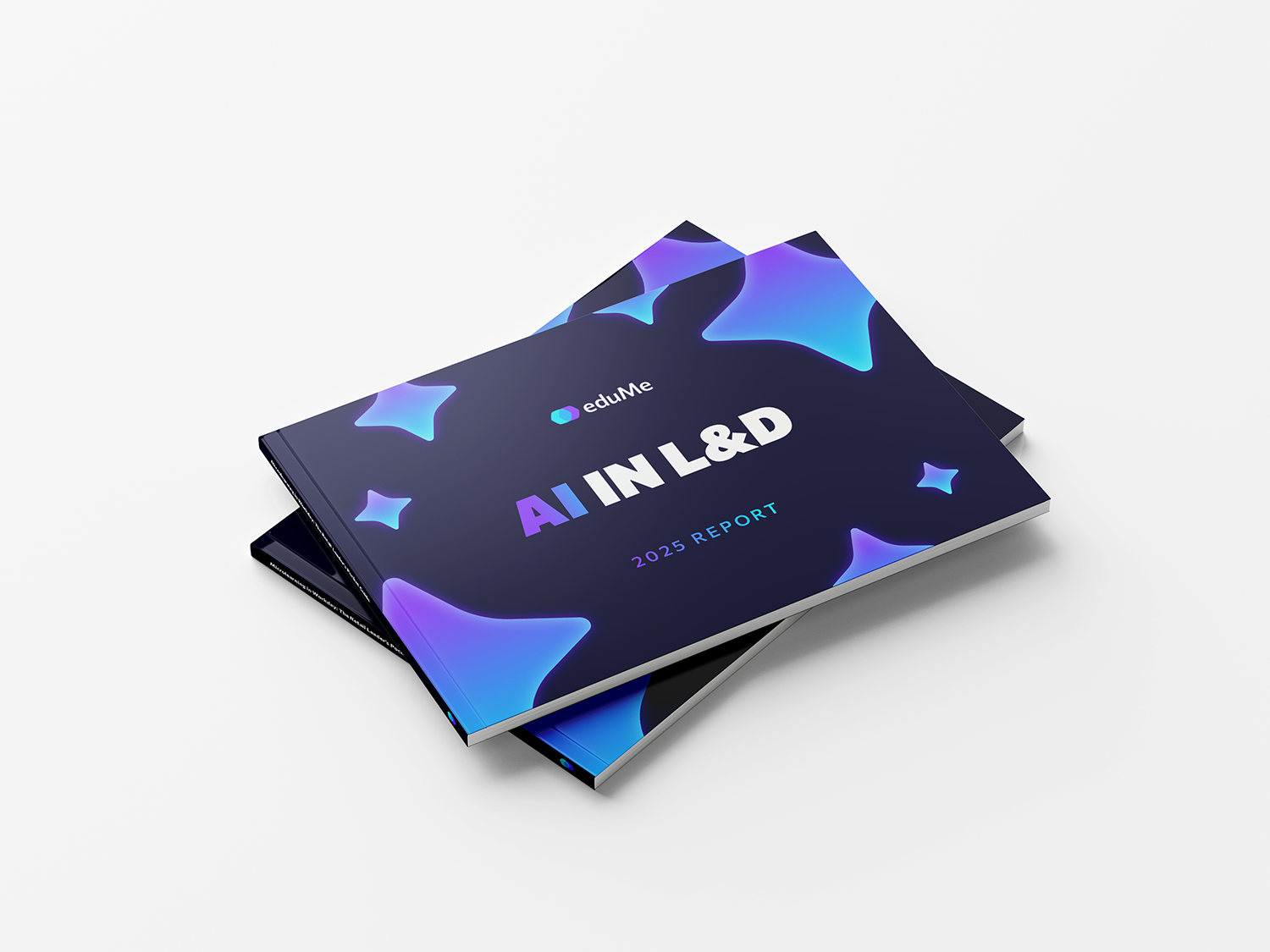
AI In Learning & Development: 2026 Report
Discover how AI is reshaping L&D - according to 1,100+ people designing, delivering and experiencing training firsthand.
How prompt engineering improves training design
Prompt engineering for instructional design is the process of structuring prompts in a way that produces high-quality, relevant outputs from AI tools. Rather than using generic or one-line inputs, effective prompts define things like:
- The target audience
- The learning objective
- The format of the output
- The level of complexity required
This approach ensures that AI-generated content aligns more closely with real training needs, reducing the need for rework and improving overall learning outcomes.
For L&D teams, developing strong prompt engineering skills enables faster content creation, more consistent quality, and greater correlation between training completed and ability to execute on-the-job.
How this AI prompt workbook supports instructional designers
Creating effective training requires more than generating content - it requires structure, clarity, and alignment to real-world performance.
Rather than acting as a static library of prompts, this workbook provides guided exercises and templates that support the full training design workflow.
Who should use this AI prompt workbook?
This resource is designed for professionals responsible for creating, managing, or improving training within an organization.
This includes:
-
Learning & Development Managers
-
Instructional Designers
-
Training Managers and Training Designers
-
Learning Experience Designers (LXD)
-
Digital Learning Specialists
-
Training Content Developers
-
HR and People Development leaders
-
Operations Managers and frontline leaders responsible for training
In many organizations, training responsibilities sit across multiple functions. This workbook is designed to support both specialists and non-specialists who are tasked with building effective training content.
More on AI L&D trends
View allWant to learn more?
Book an personalized demonstration or watch a pre-recorded one.